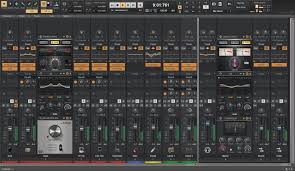
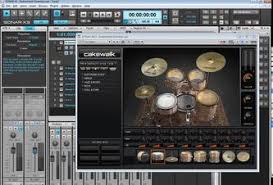
In almost every mastering session,
the following actions are performed:
Optimizing average and peak volume
levels for proper relative loudness
Signal processing - compression
& EQ
Arranging tracks in final sequence
Timing of the space between tracks
Establish a sonic "field" for all
tracks
Place track markers at head of
all tracks
Remove unwanted noise like clicks,
pops, hiss
Clean-up start and ending of each
track (including fades)
Insert Master Track Log – the PQ
codes required for replication
Loud and Proud.
Contrary to popular belief, mastering
is only a little about making a hotter sound. While it's true that the
gain, or
volume level, is boosted during
mastering, it may be that raw decibels are the least critical aspect of
the process.
What's important is the way mastering
makes songs sound. "And today, "mastering can be loud as well as proud."
How Long Does it Take?
Although there is no limit to the
time or money that can be spent on mastering, many people in the business
state that a
good rule of thumb would be an
average of 8-12 hours for most albums, or in the neighborhood of an hour
for each song.
This assumes that the CD was well
recorded and no additional processing requirements are specified. Additional
time will be
allocated depending on the condition
of the original recording, a client's specifications and any unusual or
custom needs
The Costs
Prices from respected mastering
houses vary, but you can get excellent work for $120/hour.
Of course, you can spend more,
sometimes a lot more, but for the majority of artists, you can
budget around "two dollars a
minute" multiplied by "an hour per song" and be in the ballpark.
_________________________
History
Pre-1940s In the earliest
days of the recording industry, all phases of the recording and mastering
process were entirely achieved by
mechanical processes. Performers
sang and/or played into a large acoustic horn and the master recording
was created by the
direct transfer of acoustic energy
from the diaphragm of the recording horn to the mastering lathe, which
was typically located in an
adjoining room. The cutting head,
driven by the energy transferred from the horn, inscribed a modulated groove
into the surface of a r
otating cylinder or disc. These
masters were usually made from either a soft metal alloy or from wax; this
gave rise to the colloquial t
erm waxing, referring to the cutting
of a record.
After the introduction of the microphone
and electronic amplification in the mid-1920s, the mastering process became
electro-mechanical, and electrically
driven mastering lathes came into use for cutting master discs (the cylinder
format by t
hen having been superseded).
However, until the introduction
of tape recording, master recordings were almost always cut direct-to-disc.
Artists performed live in
a specially designed studio and
as the performance was underway, the signal was routed from the microphones
via a mixing desk in
the studio control room to the
mastering lathe, where the disc was cut in real time.
Only a small minority of recordings
were mastered using previously recorded material sourced from other discs.
The recording industry was revolutionized
by the introduction of magnetic tape in the late 1940s, which enabled master
discs to be
cut separately in time and space
from the actual recording process. Although tape and other technical advances
dramatically improved
audio quality of commercial recordings
in the post-war years, the basic constraints of the electro-mechanical
mastering process
remained, and the inherent physical
limitations of the main commercial recording media—the 78 rpm disc and
the later 7-inch 45 rpm
single and the 33-1/3 rpm LP record—meant
that the audio quality, dynamic range, and running time of master discs
were still limited
compared to later media such as
the compact disc.
Running times were constrained by
the diameter of the disc and the density with which grooves could be inscribed
on the surface
without cutting into each other.
Dynamic range was also limited by the fact that if the signal level coming
from the master tape was
too high, the highly sensitive
cutting head might jump off the surface of the disc during the cutting
process.
From the 1950s until the advent
of digital recording in the late 1970s, the mastering process typically
went through several stages.
Once the studio recording on multi-track
tape was complete, a final mix was prepared and dubbed down to the master
tape, usually
either a single-track mono or two-track
stereo tape.
Prior to the cutting of the master
disc, the master tape was often subjected to further electronic treatment
by a specialist
mastering engineer.
After the advent of tape it was
found that especially for pop recordings, master recordings could be made
so that the resulting
record would sound better. This
was done by making fine adjustments to the amplitude of sound at different
frequency
bands (equalization) prior to the
cutting of the master disc.
Record mastering became a highly
prized and skilled craft, and it was widely recognized that good mastering
could make or break
a commercial pop recording. As
a result, during the peak years of the pop music boom from the 1950s to
the 1980s, the best mastering
engineers were in high demand.
In large recording companies such
as EMI, the mastering process was usually controlled by specialist staff
technicians who were
conservative in their work practices.
These big companies were often reluctant to make changes to their recording
and production
processes—for example, EMI was
very slow in taking up innovations in multi-track recording and they did
not install 8-track recorders
in their Abbey Road Studios until
the late 1960s, more than a decade after the first commercial 8-track recorders
were installed by
American independent studios. As
a result, by the time The Beatles were making their groundbreaking recordings
in
the mid-1960s, they often found
themselves at odds with EMI's mastering engineers, who were unwilling to
meet the group's d
emands to push the mastering process
because it was feared that if levels were set too high it would cause the
needle to jump out
of the groove when the record was
played by listeners.[citation needed]
Digital technology
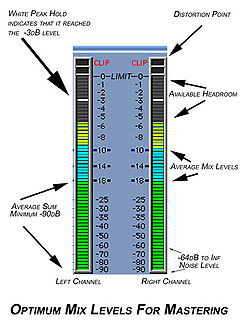
Optimum Digital Levels with respect
to the Full Digital Scale (dBFSD)In the 1990s, electro-mechanical processes
were largely
superseded by digital technology,
with digital recordings stored on HDDs or Digital Tape and transferred
to CD. The digital audio
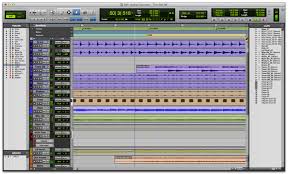
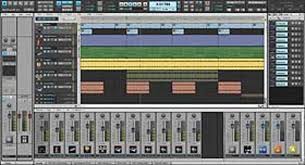
workstation (DAW) became common
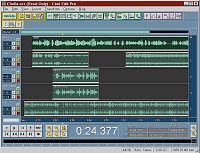
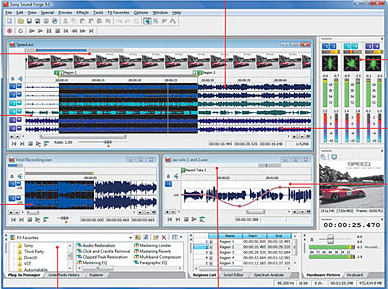
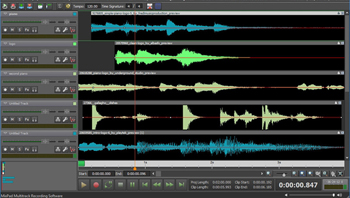
in many mastering facilities, allowing the off-line manipulation of recorded
audio via a
graphical user interface (GUI).
Although many digital processing tools are common during mastering, it
is also very common
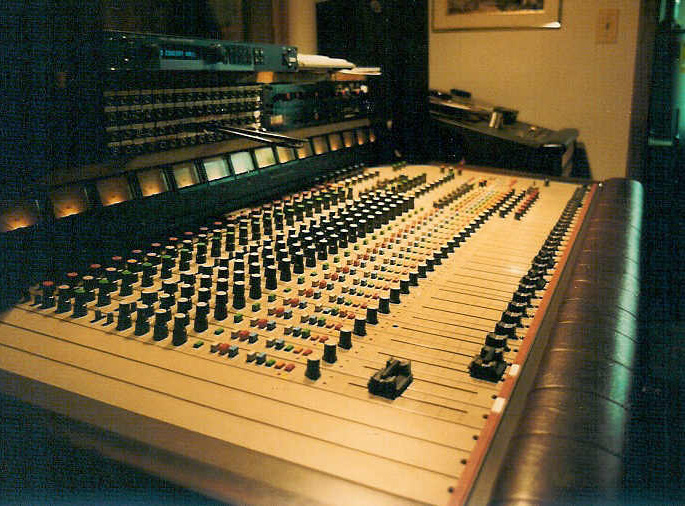
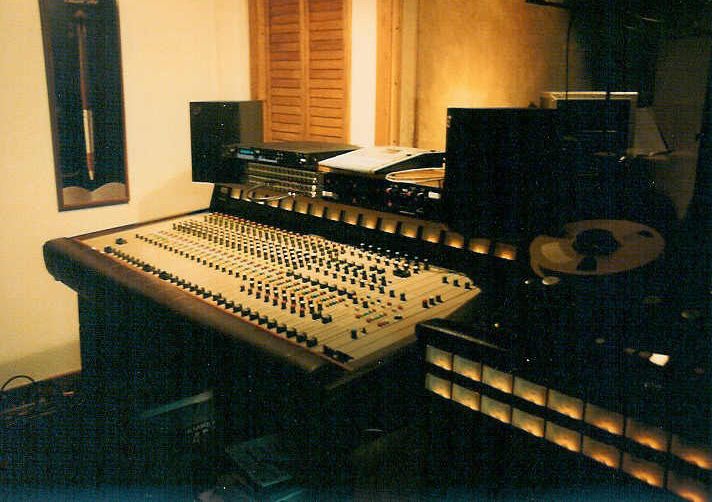
to use analog media and processing
equipment for the mastering stage.
Just as in other areas of audio,
the benefits and drawbacks of digital technology compared to analog technology
is still a matter
of debate. However, in the field
of audio mastering, the debate is usually over the use of digital versus
analog signal processing
rather than the use of digital
technology for storage of audio.
There are mastering engineers who
feel that digital technology, as of 2007, has not progressed enough in
quality to supersede
analog technology entirely. Many
top mastering studios, including Bernie Grundman Mastering (which mastered
37 Grammy-nominated
albums in 2005 alone, and some
mastering studios still embrace analog signal processing (such as analog
equalization) within
the mastering process. Additionally,
the latest advances in analog mastering technology include 120V signal
rails for previously
unavailable headroom of 150dB as
well as frequency response ranging from 3 Hz to 300 kHz.[citation needed]
In order to duplicate
this frequency response in digital
domain, a sampling rate of at least 600 kHz would be required, by the Nyquist–Shannon
sampling theorem. However, it is
pertinent that the extremes of these frequency ranges (3 Hz to 19 Hz and
21 kHz to 300 kHz) are
effectively inaudible and fall
outside the range of both human hearing and most professional microphones.
The Studio
The source material, ideally at
the original resolution, is processed using equalization, compression,
limiting, noise reduction
and other processes. More tasks,
such as editing, pre-gapping, leveling, fading in and out, noise reduction
and other signal
restoration and enhancement processes
can be applied as part of the mastering stage. This step prepares the music
for either
digital or analog, e.g. vinyl,
replication. The source material is put in the proper order, commonly referred
to as
assembly or (track) sequencing.
If the material is destined for
vinyl release, additional processing, such as dynamic range reduction,
frequency dependent
stereo–to–mono fold-down and equalization,
may be applied to compensate for the limitations of that medium.
Finally, for compact disc release,
Start of Track, End of Track, and Indexes are defined for disc navigation.
Subsequently, it is rendered either
to a physical medium, such as a CD-R or DVD-R, or to a DDP file set,
the standard method of secure delivery
for CD and DVD replication masters.
The specific medium varies, depending
on the intended release format of the final product.
For digital audio releases, there
is more than one possible master media,
chosen based on replication factory
requirements or record label security concerns.
Regardless of what delivery method
is chosen, the replicator will transfer the audio to a
glass master that will generate
metal stampers for replication.
The Process
The process of audio mastering
varies depending on the specific needs of the audio to be processed.
Mastering engineers need to examine
the types of input media, the expectations of the source producer or recipient,
the limitations of the end medium
and process the subject accordingly.
General rules of thumb can rarely
be applied.
Steps of the process typically include
but are not limited to the following:
Transferring the recorded audio
tracks into the Digital Audio Workstation (DAW) (optional).
Sequence the separate songs or
tracks (the spaces in between) as they will appear on the final release.
Process or "sweeten" audio to maximize
the sound quality for its particular medium (e.g. applying specific EQ
for vinyl)
Transfer the audio to the final
master format (i.e., CD-ROM, half-inch reel tape, PCM 1630 U-matic tape,
etc.).
Examples of possible actions taken
during mastering:
Editing minor flaws
Applying noise reduction to eliminate
clicks, dropouts, hum and hiss
Adjusting stereo width
Adding ambience
Equalize audio across tracks
Adjust volume
Dynamic range expansion or compression
Peak limit
______________________
Salvage Jobs
Sometimes, mastering engineers
are called upon to do more of a salvage job than a simple enhancement.
Live recordings, for example, may
need sophisticated EQ and dynamics, which is more than you can fit into
the Final Effect slot.
The solution is use the D1600 more
as a signal processor than a recording device.
For example, run your two-track
master into two inputs of the D1600, and use parametric EQ for the insert
effect slot.
Multiband limiting (DY3) might
also be appropriate as an insert effect if the dynamics vary too much.
Next, for the Final Effect, insert
dynamics processing to produce a smooth, hot-sounding master...then burn
your CD.
It's amazing how much some judicious
processing can enhance material you thought might not be even useable.
Be aware, though, that mastering
is a subtle process. A few dB or EQ or dynamics control is usually all
you need.
Higher amounts will unbalance the
overall sound -- if you boost the bass a lot, for example, then the treble
will sound thin by comparison.
This is why mastering is considered
such an art: it's all about subtle changes adding up to a major improvement
in the sound.
There's no guarantee that using
mastering tools is going to produce a great master recording, any more
than
buying a guitar is going to make
you a great guitarist. In either case, practice makes perfect.
______________________







 MAJOR
POST PRODUCTION &
MAJOR
POST PRODUCTION &