Home | Services | Studio Gallery | Links | Contact Us
(Record Companies - Bar Codes
- Cover Songs - Copyrights - Royalties & Rates)











The
recording industry is dominated by the Big Five (Universal, EMI, BMG, Warner
and Sony)
who between
them have controlling interests in the majority of the major labels.
However
there are also successful record companies not associated with the Big
Five
(often
known as 'independent' labels) and some of these are listed below.
Universal Music Group
EMI
BMG
Warner Music Group
(AOL Time Warner)
Sony Music
Label guides on the
web
Reference works
SESAC, Inc. is
a performing rights organization
with
headquarters in Nashville and offices in New York,
Los
Angeles, Atlanta, Miami and London.


COPYRIGHT ACT
Copyright is a legal device that
protects the music itself -- not the paper on which it is printed nor the
recording on which it is performed.
It is copyright alone that makes
music publishing feasible, for without it there is no protection against
the unrestricted and uncompensated use of the
property of a composer/lyricist
and their publisher.
NEW COPYRIGHT FORM
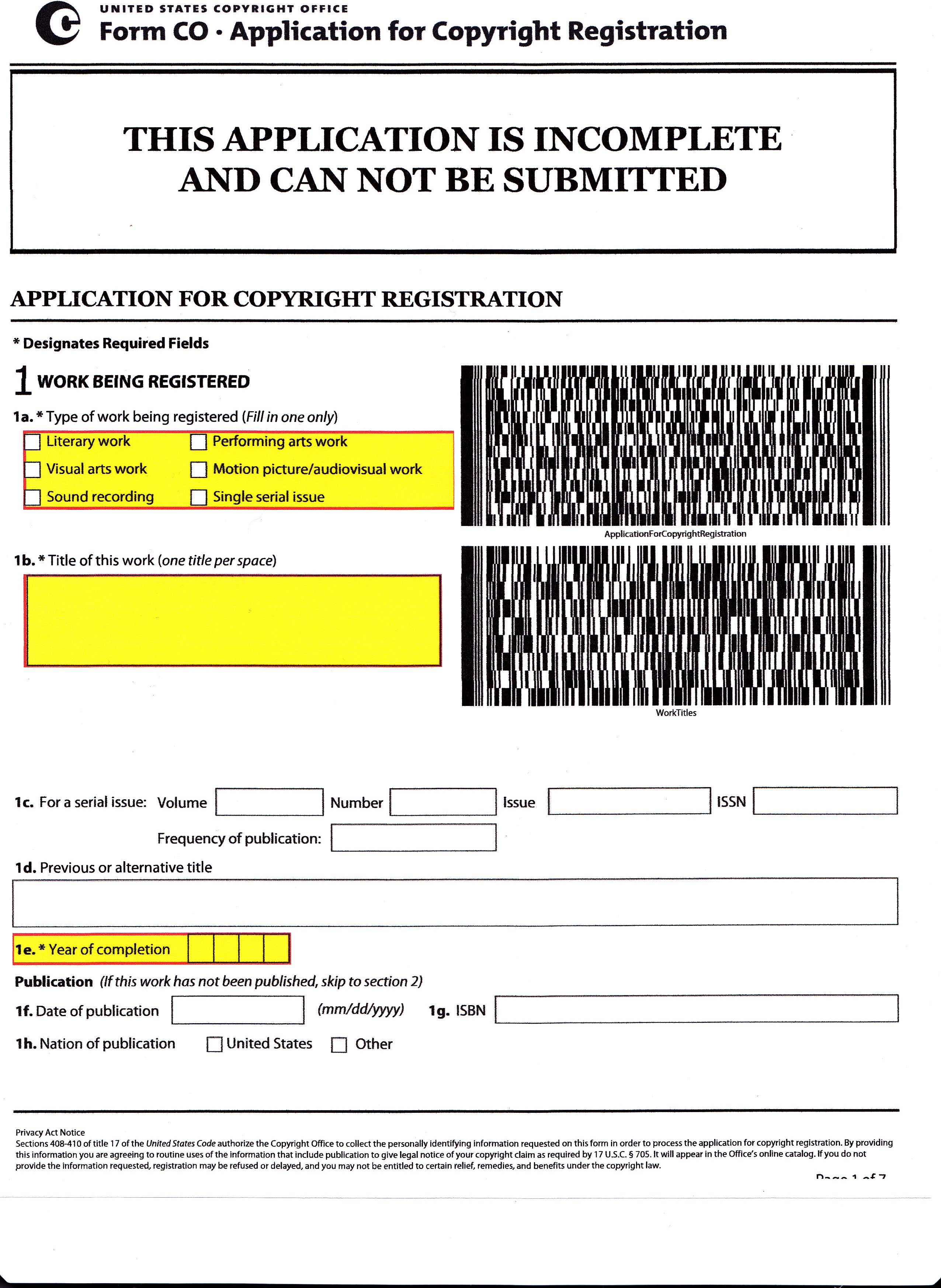
Click Form Above To Download New Online Form .pdf
____________________
Royalties & Rates
HFA ( Harry Fox Agency) is the foremost mechanical licensing,
collection, and distribution agency for music publishers in the U.S.

What does HFA do?
HFA provides the following services to its affiliated
publishers:
Issues mechanical licenses
Collects mechanical royalties
Distributes mechanical royalties, and synchronization
fees for licenses granted prior to 2002.
Conducts royalty examinations
Investigates and negotiates new business opportunities
Pursues piracy claims
_______________________
How To Start Your Own Record Label !
Cick
Here
_______________________
Bar Codes
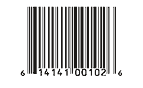
What is a Bar Code?
A bar code, also known as a UPC
(Universal Product Code), is simply a unique 12-digit number that allows
retailers
to easily track sales of your product
within their inventory system.
How Does a Bar Code work?
When you go to sell your product
at a retailer (i.e. Target, Costco, or Amazon.com), that retailer will
have you fill out a product information form.
On that form is where you will
put your company and product details as well as your 12-digit UPC bar code
number.
The retailer then manually enters
that information into their inventory management computer. This way, when
they scan your bar code at the register,
it calls up that form in their
system and gives you credit for the sale. In other words, the bar code
is simply a link between
your product and the product information
form you fill out for each store that sells your product.
How do I get the bar code on my CD or DVD?
Once your order the bar code, they'll
send it to you in graphical form. You also have a unique number with your
bar code.
You can take that graphic and add
it to your disc graphic, or the dvd case overwrap graphic.
Will my Bar Code be scannable?
Yes. As long as the proportions
of the bar code are preserved and as long as it is printed at 300 dpi or
higher, your bar code will be scannable.
What are EAN bar codes? Do I really need one?
The EAN bar code system is used
outside of the U.S. and Canada and is 13 digits long. It is based upon
the 12-digit
UPC system with the simple addition
of a single number that signifies a country code. The great thing about
having a 12-digit
UPC bar code is that it will work
in any country in the world. Therefore, if you have a UPC bar code you
do not need an EAN bar code.
How many Bar Codes do I Need?
A bar code is simply an inventory
tracking tool that retailers use in their computer systems. For example,
if you sell two DVDs and a CD,
you would want 3 bar codes
Will my Bar Code work for any retail product?
Yes, all retail products in the
United States (except for magazines and books) require the same type of
12-digit UPC bar code.
Therefore, whether you need a bar
code for your t-shirt, CD, toaster, or whatever it is you are selling,
Subdivisions Media, Inc. can be
of valuable service to you.
Will my Bar Code work in a country other than
the United States?
Yes, the bar code will work anywhere
that either UPC or EAN bar codes are scanned - which is most of the modern
world.
This includes Canada, Australia,
the UK, Europe, Asia, Mexico, South America, the Middle East, and anywhere
else that they use bar codes.
Is there any information stored or encrypted within
the bars of a UPC bar code?
No. There is no information stored
or encrypted within the bars of a UPC bar code.
The bars are simply a style of
font (called the UPC-A font) that correlates to the 12 numbers beneath
the bars.
How Does information get linked to my bar code?
When you go to sell your product
at a retailer (i.e. Target, Costco, or Amazon.com), that retailer will
have you fill out a product information form.
On that form is where you will
put your company and product details as well as your 12-digit UPC bar code
number.
The retailer then manually enters
that information into their inventory management computer. This way, when
they scan your bar code
at the register, it calls up that
form in their system and gives you credit for the sale. In other words,
the bar code is simply a
link between your product and the
product information form you fill out for each store that sells your product.
Will a bar code I purchase from 3rd party bar
code companies be completely unique to me?
Yes. The bar code you purchase
from this web site originates from the U.C.C. and is guaranteed to be unique.
You are the only person in the
world who can legally use that bar code number.
Do I ever have to pay any Renewal Fees?
No, most 3rd party bar code providers
charge a one time fee.
Will my bar code ever expire?
No, your bar code will never expire.
Once the bar code is issue to you, it will never be issued to anyone else
again and it is yours for life.
Are there any stores where my bar codes will not
work?
The bar codes will not be able
to be used at either Wal-Mart or Kroger's. This is due to their application
process and
not to the actual functionality
of the bar codes. In the application process for these 2 stores only, they
require a copy of
your GS1/UCC certificate with your
own company's name on it. Unfortunately neither we, nor any other reseller
of bar codes,
can provide you with this document.
If you intend to sell your product at either Wal-Mart or Kroger's, you
must purchase
your bar codes directly from GS1/UCC
to get this document. The bar codes will work at any other stores in the
world but these 2 stores.
Can I print my bar code in anything other than
black on white?
It is very important that you always
maintain a high degree of contrast between you bar code and its background.
Why should I purchase UPC bar codes
from 3rd party bar code companies instead of going directly to the U.C.C
?
All bar codes must originate from
the U.C.C. However, if you purchase them directly from the U.C.C.
you have to buy a minimum of 100
bar codes at a time at a minimum charge of $750. Plus they will additionally
charge you an annual renewal fee
of at least $150. If you only need a small quantity of bar codes, you can
get
exactly what you need from us at
a much lower price. Also, since most of the 3rd party companies joined
the U.C.C. before
August, 2002, they don't get charged
renewal fees by the U.C.C.
For this reason many of those companies
don't charge you renewal fees each year either.
Where do I get my Bar Code?
buyabarcode.com - Much of the information
on this page was found on buyabarcode.com, a great source of information.
upccode.net - another good purchase
a bar code company.
ezupc.com - low cost, but we have
not tested their services.
What is a release number, and do I need to have one?
Record business professionals
and anyone that inventories music (stores, etc.) don't refer to records
by name,
but by release number. A release
number, also known as matrix number or catalog number,
is an identification number for
your CD or tape. The number generally consists of a combination of up
to seven letters and numbers (such
as CD1001), which can be picked by you and based on any combination
of letters or numbers - your band
name, artist's name, special dates or numbers, etc. Every project needs
a release
number since retailers keep their
inventories that way. If you do not indicate a release number on your order
form,
we will assign one to your project
Do I need a barcode?
A barcode, or UPC code, is
essential if you're planning to sell your CDs or cassettes in stores,
to make them [retail-ready] products.
As a special service to our customers,
This link. will save $700,
and stores will be able to scan and sell your merchandise.
Please dowload or special SOUNDSCAN
form. (Adobe Acrobat Reader required)
To get your own barcode (recommended
if you have regularly scheduled releases)
assigned by the Uniform Code Council,
call 1 800-543-8137 for an application kit,
or visit their site at http://www.uc-council.org/
How can I get a resale certificate?
If you take delivery of your
product in California, and you don't have a resale certificate, you have
to
pay sales tax. Resale certificates
are issued by the state to legitimate businesses who resell their merchandise
to distributors and retailers,
and exempt you from paying taxes for CD and cassette manufacturing. Instead,
those
taxes will be passed on to the
consumer. For more information and the necessary forms call 510-286 0347.
Note: Unless you run a full time
business that sells to distributors and retailers, it is often difficult
to get a resale
certificate in California, and
the Franchise Tax Board will want annual payments of at least $1,800.00
even if you don't sell anything!
I've written a number of original songs. How can I protect them?
Although any song you write
is officially your property, it can be very difficult to prove that in
a court of law.
Therefore, we strongly advises
you to copyright all of your original material. Once officially copyrighted,
no one else will be able to record
your songs without your permission. (And if they do, this establishes your
legal grounds for claiming damages
due to infringement of your copyright.) Call the Library of Congress
in Washington, D.C.(202-707-9100)
to get the necessary forms. You'll have to send them back the completed
forms,
the songs on a tape, and a lyric
sheet, along with a $20 fee. We recommend that you send these materials
via certified
mail to ensure that they arrive
safely. You can send as many songs as you like for the one-time fee, as
long as all of
the selections in the collection
are by the same author. If they are by different authors, at least one
of the authors
must have contributed copyrighted
material to each selection.
In a few weeks, you'll receive
a clearance form,
confirming that your material has
been copyrighted.
After you've done this, you may
want to become
an affiliate of a music licensing
company. Companies like BMI and ASCAP offer licensing services which track
radio play and television usage
to ensure that you are paid performance rights.
For more information on these services,
call: ASCAP:212-621-6000, or BMI: 212-586-2000, SESAC: 212-586-3450.
In audio duplication, the best
surprise is no surprise, and the Hot Tracks master reference is an extra
step
we take to ensure that you are
completely satisfied with your finished CDs.
What should I do if I have a cover song on my album?
If you are using someone
else's copyrighted composition(s), you need to get a mechanical license
in writing.
A mechanical license is referred
to by lawyers as a (compulsory) license, which means that it cannot be
denied to you
or anybody that wants to use a
cover song, but it can be a long and sometimes complicated process. Hot
Tracks,
as part of our commitment to artists
everywhere, requires that you affirm that you have the proper licensing
on hand,
or have applied for it, before
we will manufacture your work. There are three ways to get mechanical licenses:
1) First, find out who owns the
copyright on the composition bycontacting BMI (212-586-2000 or www.bmi.com
),
ASCAP (212-621-6160 or www.ascap.com
), or SESAC (800-826-9966 or www.sesac.com ). Or, if you are Internet savvy,
you can Telnet into the Copyright
Office's database and look up the official record. Armed with this info,
you can contact the publisher
and negotiate your own rates. For a song that is not that well known
or that is not in the current music
scene, this can often be easy to do. After all, more exposure is what most
songwriters are looking for.
2) If you don't want to negotiate
your own rates or if the song is currently or was popular,
contact the Harry Fox Agency (212-370-5330
or http://www.harryfox.com/).
They are authorized to issue mechanical
licenses at the statutory rate .
3) If you cannot afford the standard
fees, contact a group like the Volunteer Lawyers for the Arts
(call 215-545-3385 for the chapter
nearest you). They can often help negotiate reduced royalties for schools
and nonprofit groups.
Licensing
Do you have questions reguarding
any of these subjects? If So visit The Harry Fox Link above
Mechanical Licensing | Digital
Licensing | International Monitoring | Royalty Compliance | Royalty Collections
& Distributions
The Harry Fox Agency, Inc. (HFA)
Statutory Royalty Rates
Current Statutory & Historical Royalty Rates
National Music Publishers' Association (NMPA)
For the period January 1, 2002 to December 31, 2003 the statutory mechanical royalty rate is as follows:
8.00 Cents
for songs 5 minutes or less
- or -
1.55 Cents per minute or
fraction thereof
for all songs over 5 minutes.*
* For example:
5:01 to 6:00 = $.093 (6
X $.0155 = $.093)
6:01 to 7:00 = $.1085 (7
X $.0155 = $.1085)
7:01 to 8:00 = $.124 (8
X $.0155 = $.124)
CONTROLLED COMPOSITION CLAUSES
ASCAP
It should be mentioned that the
per-song statutory mechanical royalty can be reduced under certain circumstances
(for example, if the writer is
the recording artist or if the record is sold as a midline, record-club,
TV-only, special-products compilation,
or budget album), in which case the royalty figures may be less
than those mentioned above. However,
such reduced rates are voluntary and occur only if the publisher agrees
or if the songwriter is a recording
artist and has to accept such lower royalties in the record company contract.
Here’s where things get complicated,
so bear with us, and read carefully. Many agreements-the majority,
in fact-contain language which
provides that if the recording artist or producer has written or co-written
a song,
has ownership or control of a song,
or has any interest in any composition on the album or single, the mechanical
royalty rate payable by the record
company for that composition is reduced. Such compositions are referred
to as controlled compositions.
Most contracts attempt to establish
a 75% rate (specifically, 6¢, which is three-quarters of the 8¢
full statutory rate)
for all controlled compositions.
The figures are computed at the mechanical rate in effect at either (a)
the time the recording is produced,
(b) the date of the recording contract
with the artist, (c) the date that a particular album commenced recording
(or should have commenced recording
per the contract), or (d) the date the recording is originally released
(regardless of whether the same
recording is released again at a later date in another album).
In other cases, the record company
will establish a maximum aggregate mechanical penny royalty limit for an
album
(for example, 10 songs x 6¢
= 60¢ per album). In a sense, a cap on royalties. Under these clauses,
the artist or producer guarantees
that he/she will secure reduced
mechanical rates on all songs on the album so that the maximum penny rate
(e.g., 60¢) payable
by the record company to music
publishers and songwriters for all songs is not exceeded. If this maximum
aggregate album-royalty rate
is surpassed-for example, if the
writer/artist wants to put 12 songs rather than 10 on the album- the difference
is normally
deducted from the artist’s or producer’s
record, songwriter, and publishing royalties, or, the per-song royalty
rates
for the writer/artist or writer/producer
will be reduced proportionately.
Now, let’s take a look at how this
arithmetic affects a specific situation: Let’s say that the writer/ performer
has a
10-song x 6¢ maximum royalty
rate on his/her album (in other words, 60¢ total) and, instead of
writing all 10 songs,
writes only eight and records two
songs from outside writers who demand the 8¢ statutory 2002-2003 rate
per song.
In this case, the mechanical royalties
would look like this:
60¢
album-royalty maximum payable
by record company
- 16¢
two outside songs at 8 ¢
each
44¢
/ 8
the number of artist-written
songs
5.5¢
per-song royalty to artist/writer
and publisher
As you can see, the writer/artist’s
mechanical royalty has been reduced to 5.5¢ per song from 6¢
per song
due to the inclusion of two outside-written
songs on the album. By the same token, as the writer/artist records
more outside-written songs, the
artist’s per-song royalties for his/her own works will be further reduced.
Sometimes, in fact, when a writer/artist
has recorded a substantial number of songs by other writers, he/she has
been put in a position of receiving
no royalties for his/her own songs, since the aggregate album-royalty maximum
has been paid out to outside songwriters
and publishers. Ouch! But it can get even worse.
There have actually been instances
in which the writer/artist’s mechanical royalties have been in
the minus column for every album
sold because of the operation of these controlled-composition clauses.
Additionally, the era of multiple
remixes has given rise to a clause which provides that the writer/artist
will only
receive a mechanical royalty for
one use of his/her song regardless of the number of versions contained
on the single or album.
______________________



Submit
ExpressFree
Webmaster Tools
